

Red Teaming
Red Teaming, Streamlined and Structured
Plan, execute, and operationalize adversary simulations through structured workflows, attack-chain visibility, and collaboration across offensive and defensive teams.




Trusted By World Leading Cybersecurity Companies


Cyver Core gives you the workflows, automation, and collaboration tools to deliver high-impact red team operations, faster. 
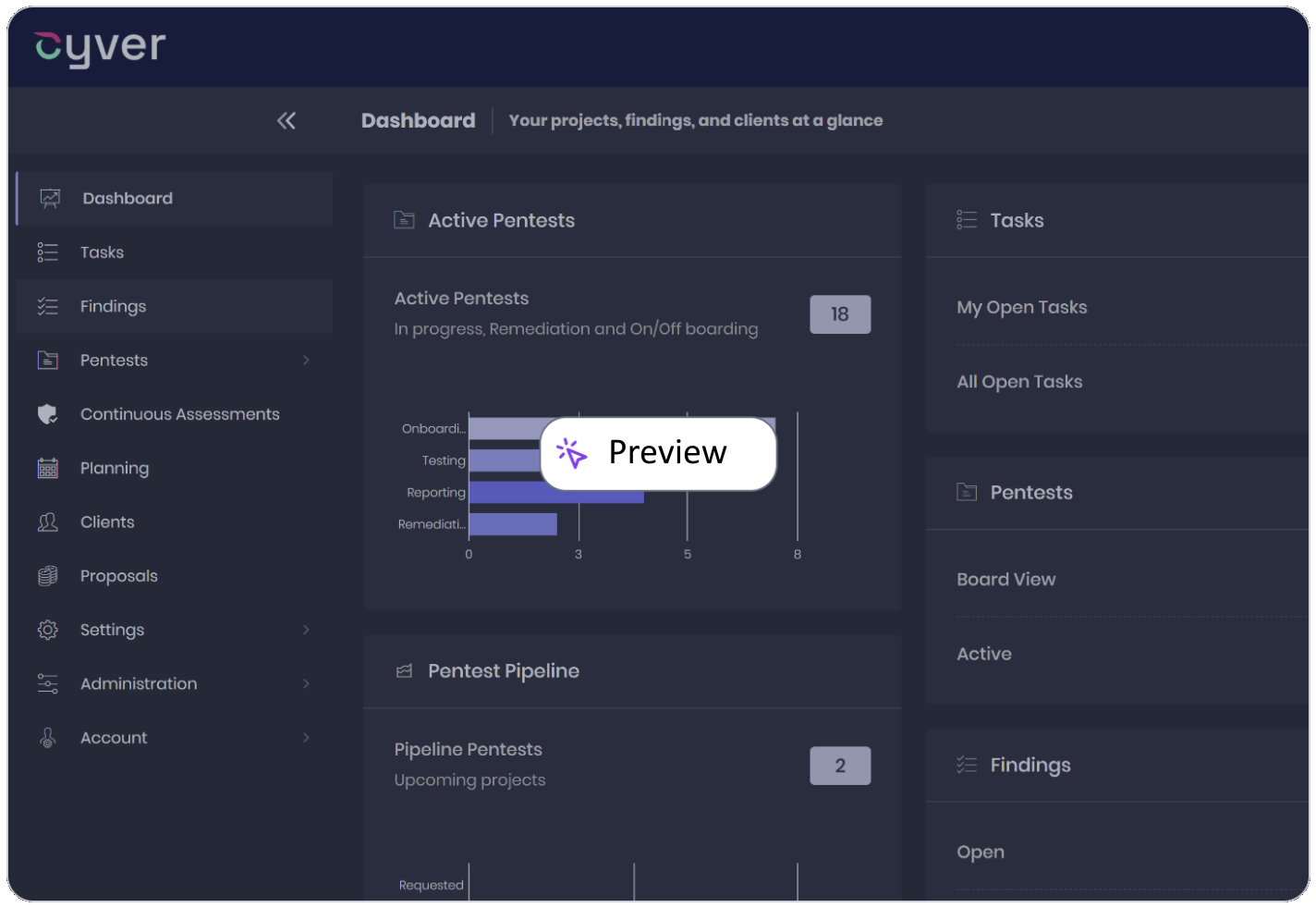

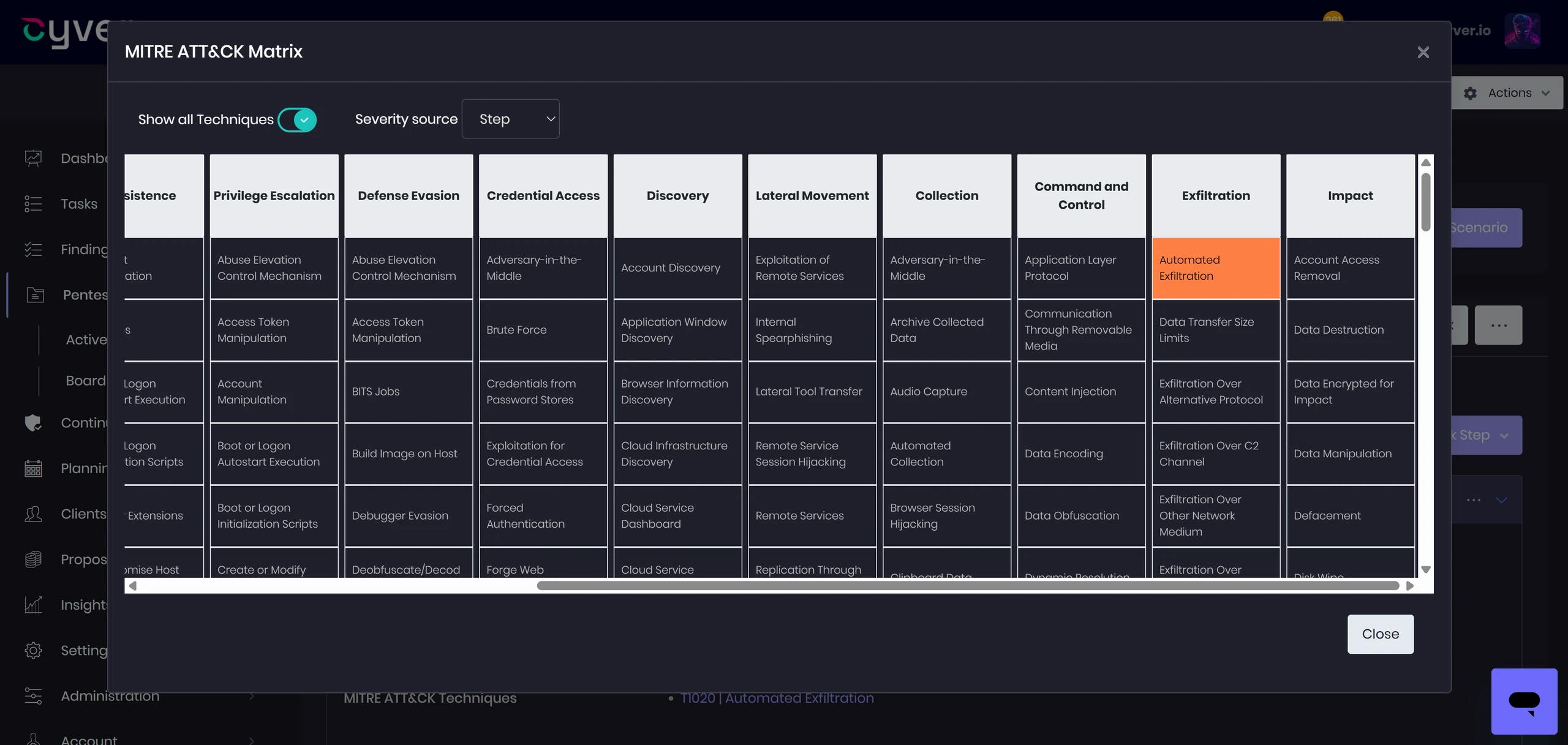
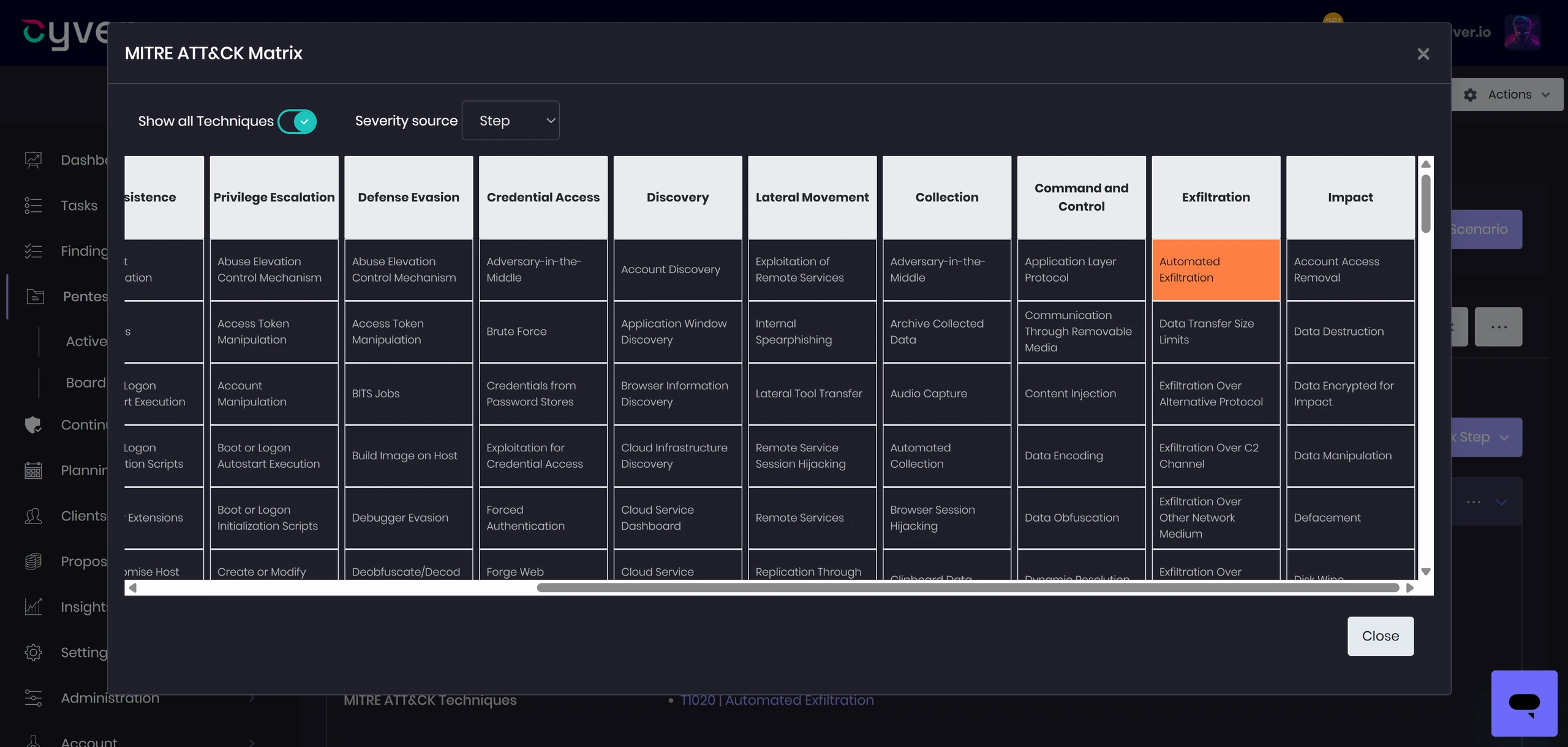
Map findings using the MITRE ATT&CK Cyber Kill Chain frameworks

Generate custom, reusable reports that evolve with your methodology

Invite clients or blue teams into a secure client portal for better collaboration

Automate deliverables and reduce your turnaround time


Red Team Operations Become Hard to Structure as Programs Grow 
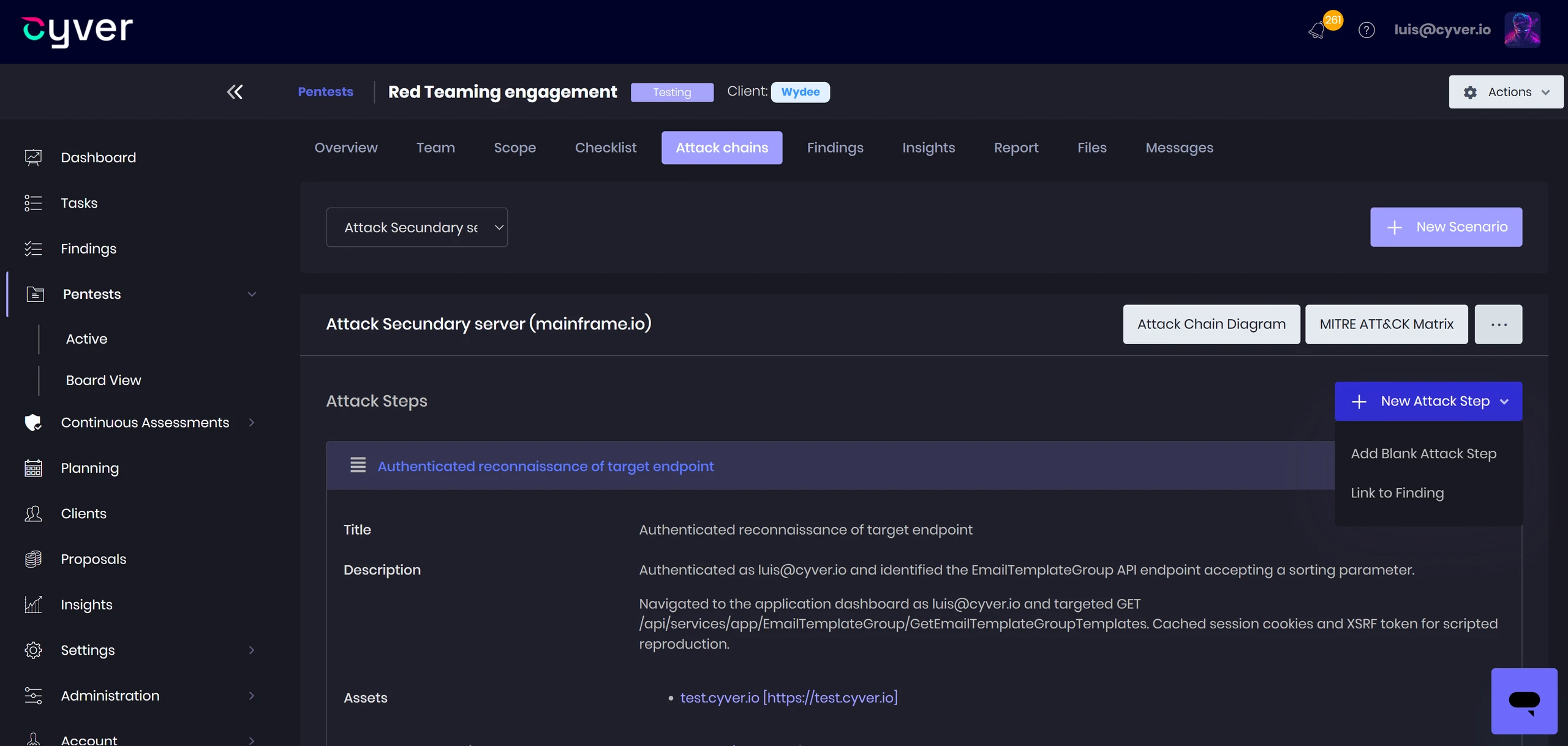
Cyver Core helps teams structure adversary simulations, visualize attack paths, and align offensive and defensive teams around the same attack story.
As red team programs scale:
- Attack scenarios are difficult to document and reuse
- Mapping techniques across engagements becomes inconsistent
- Explaining attack paths to stakeholders takes too much effort
- Collaboration between red and blue teams lacks structure
- Reusing attack scenarios and operational knowledge across engagements
Structure Red Team Operations in
One Platform 
Red team engagements involve multiple tools, techniques, and workflows. Cyver helps teams centralize findings with vulnerability management, map adversary behaviors, and maintain structured engagement documentation.
- Document attack scenarios, adversary behaviors, and repeatable simulation workflows
- Map techniques across engagements
- Track findings and attack paths
- Maintain structured documentation across operations
- Align red and blue teams around shared ATT&CK-mapped scenarios
- Maintain visibility across recurring adversary simulations


“We have several clients requesting penetration tests or red team assessment on recurring intervals. Some of these are scheduled yearly, while others go as low as one assessment every quarter. With Cyver Core, it is really good that they can compare new reports to historical results in the portal itself.”
Features
Visualize Attack Chains and Adversary Techniques
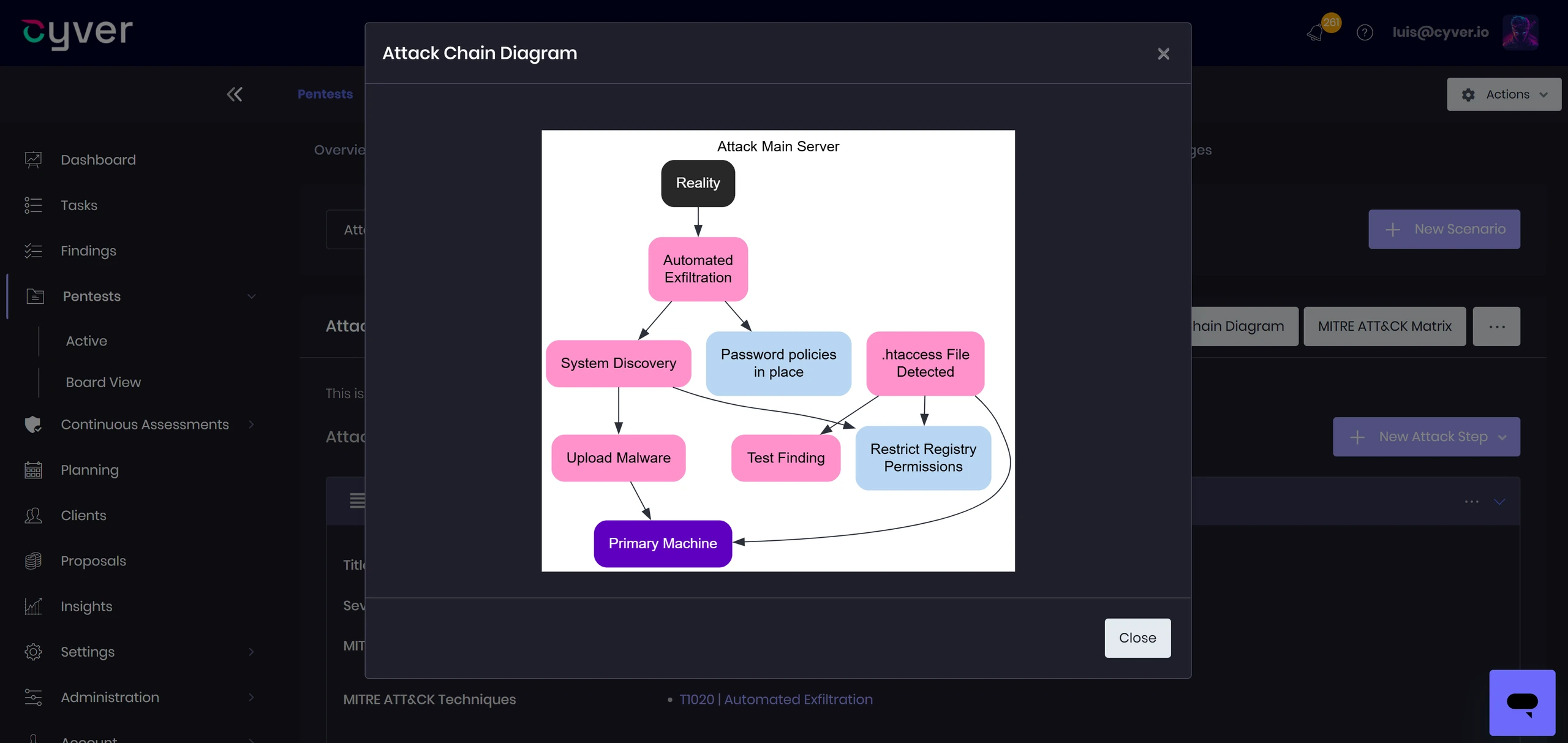
Red team engagements often involve complex attack paths that are difficult to explain. Cyver helps teams structure and visualize adversary activity using frameworks like MITRE ATT&CK and the Cyber Kill Chain.
Structure scenarios and engagement objectives 
-
Attack scenarios - Define the adversary scenarios and objectives your team will assess.
-
Scope and rules of engagement - Document target assets, testing boundaries, and operational constraints.
-
Reusable project templates - Standardize engagement setup with predefined workflows and custom fields.
-
Runbooks and checklists - Organize repeatable assessment procedures and track testing coverage.
-
Team coordination - Assign responsibilities, schedule activities, and keep internal notes connected to the engagement.



Map techniques and visualize attack chains 
-
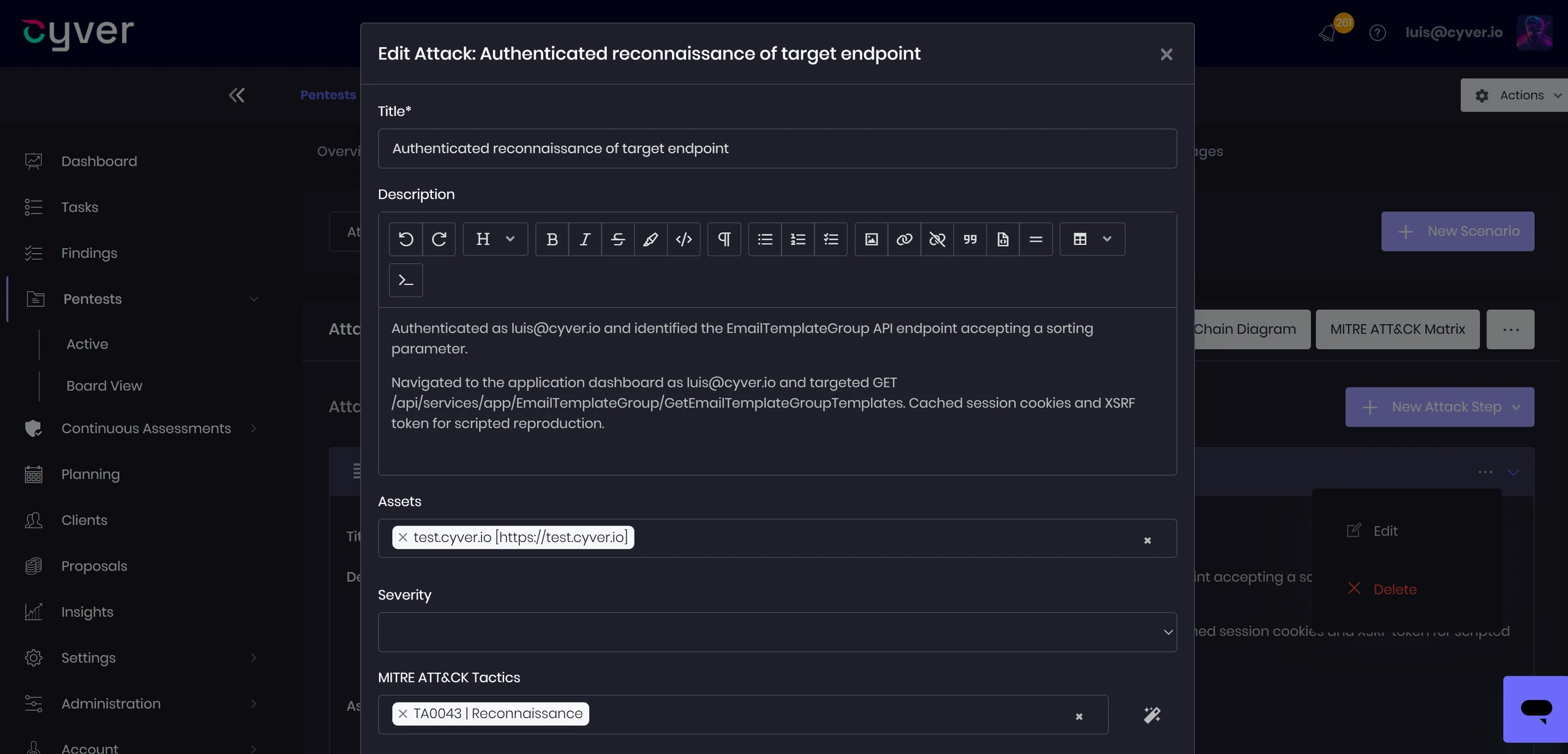
MITRE ATT&CK mapping - Associate attack steps with relevant tactics and techniques.
-
Attack-chain diagrams - Connect steps to show attack progression and alternative paths.
-
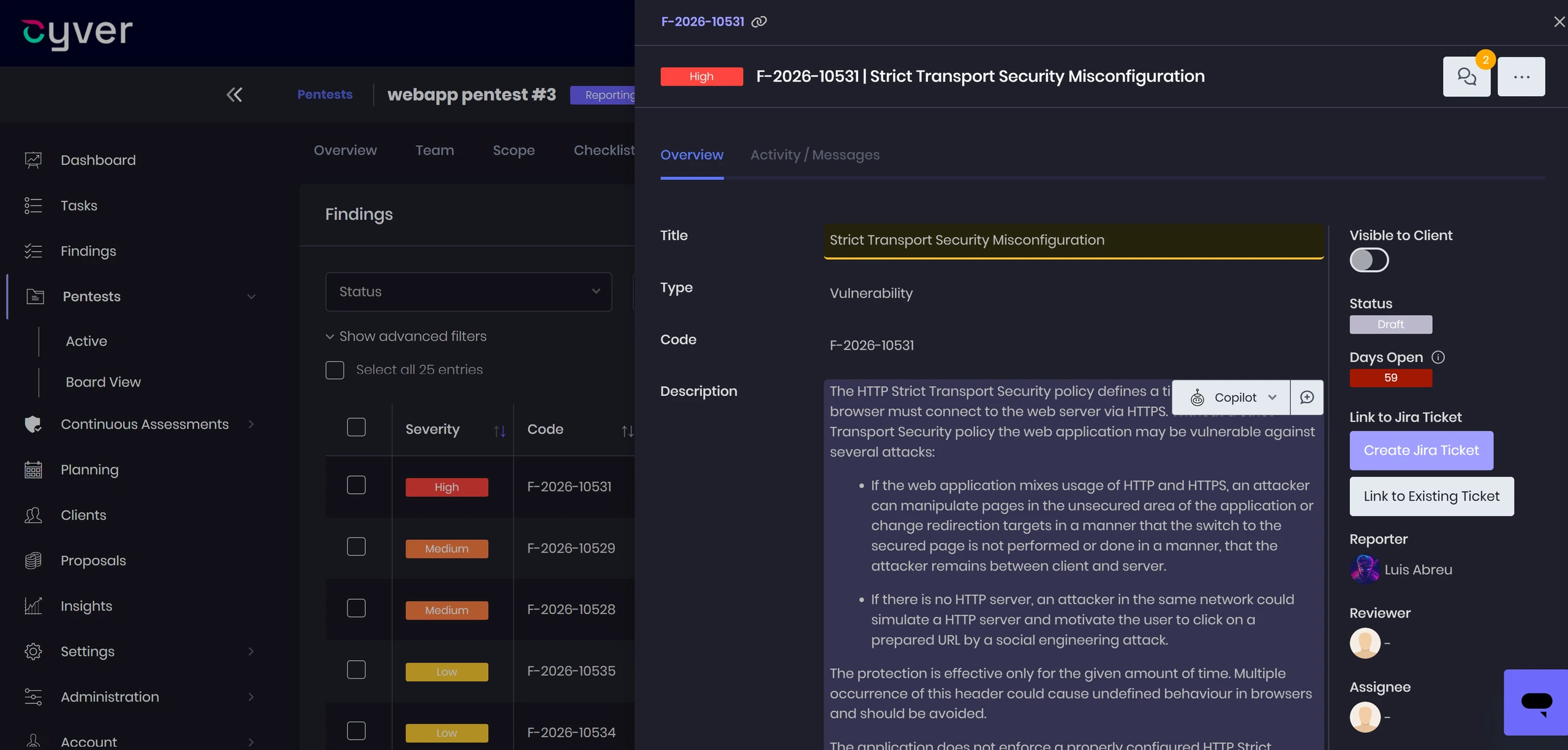
Finding-linked steps - Link vulnerabilities and affected assets to the steps where they were used.
-
Mitigation mapping - Document defensive measures that could interrupt the attack chain.
-
Scenario goals - Connect attack activity to the objectives being assessed.
Capture evidence and operator activity 
-
Step documentation - Record actions, observations, and technical details throughout the engagement.
-
Supporting evidence - Attach evidence to findings and attack steps to substantiate reported outcomes.
-
Activity timestamps - Record when actions occurred to support timeline reconstruction.
-
Tooling context - Document tools and relevant execution details alongside attack activity.
-
Defensive observations - Record detection and response observations for discussion with blue teams.
Build and review the engagement narrative 
-
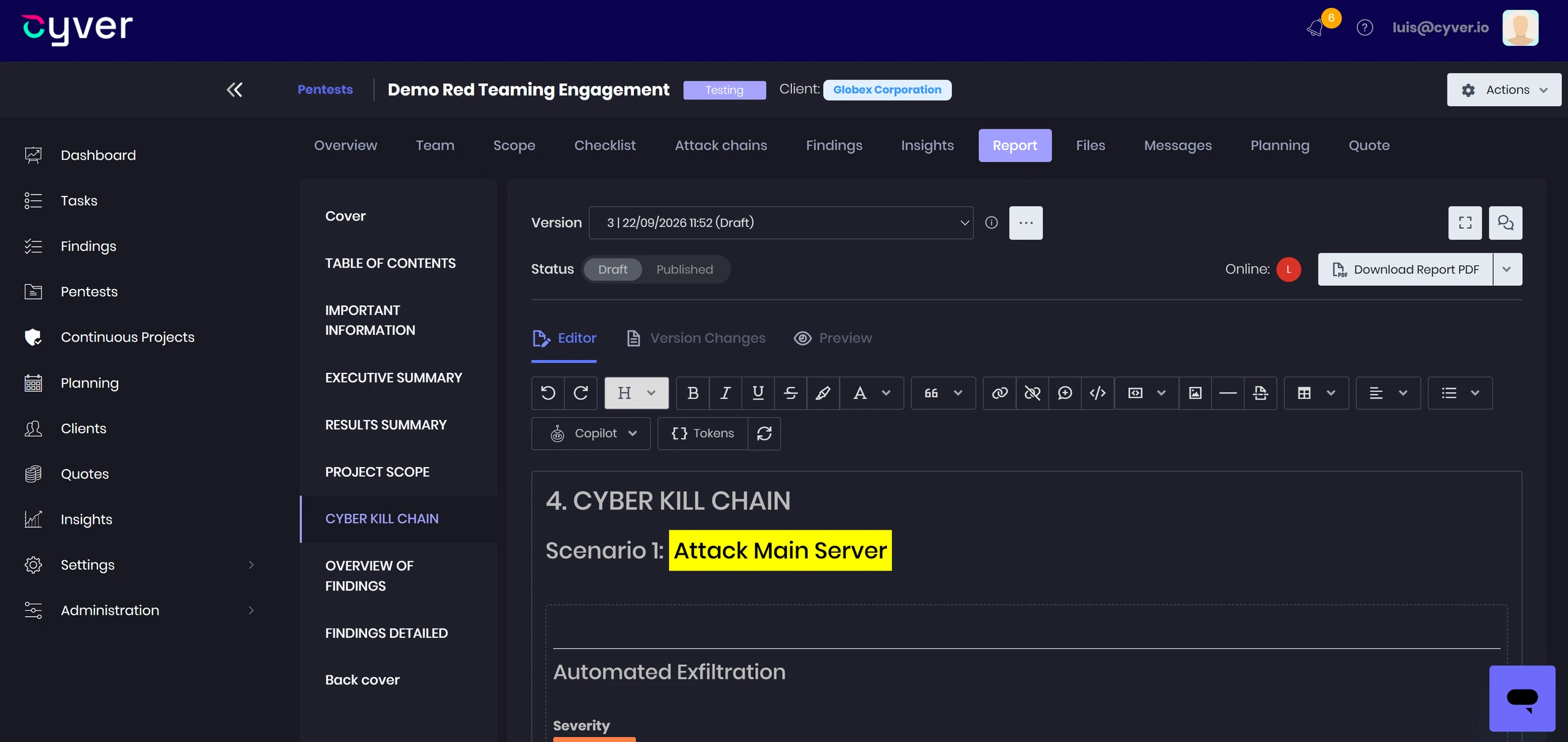
Red team report templates - Structure deliverables around scope, methodology, scenarios, and outcomes.
-
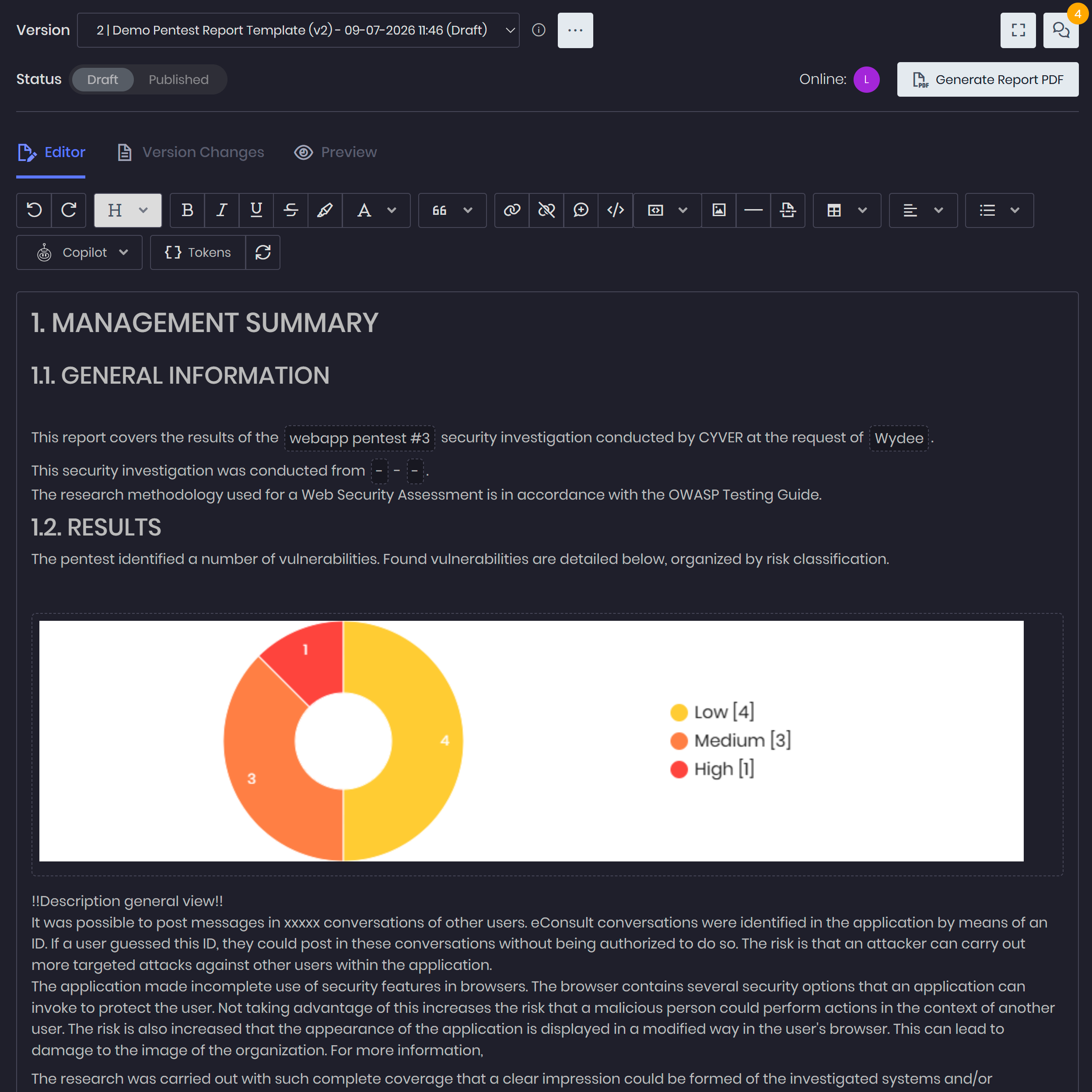
Dynamic report tokens - Populate reports with engagement data, findings, and attack-chain diagrams.
-
Attack timelines - Include step details and timestamped activity to explain how the engagement unfolded.
-
Collaborative review - Refine technical narratives with shared editing, comments, and report versioning.
-
Client portal delivery - Share reports and evidence with clients and coordinate follow-up with defenders.
Accelerate documentation with AI assistance 
-
Contextual drafting - Draft finding descriptions and engagement narratives using documented project context.
-
Executive summaries - Translate technical outcomes into clear explanations of risk and business impact.
-
Custom editing prompts - Refine report sections for clarity, structure, and consistency.
-
MCP-connected assistants - Connect compatible tools such as ChatGPT and Claude to retrieve findings, inspect evidence, and update permitted data.
-
Operator oversight - Validate AI-generated content against recorded activity and evidence before delivery.
Process
The Red Team Exercise Journey
With a full feature suite, our pentest management platform helps you streamline, automate, and simplify workloads at every step.

1. Attack Simulation
Simulate real-world adversary behaviors and offensive scenarios.
2. Attack Mapping & Visualization
Map attacker techniques and visualize attack paths using frameworks like MITRE ATT&CK.


3. Findings Documentation
Document vulnerabilities, evidence, and operational insights throughout the engagement.
4. Stakeholder Reporting
Communicate attack scenarios clearly to technical and executive stakeholders.


5. Detection Improvements
Help defensive teams validate detections and improve security visibility.
%
Customer Satisfaction
%
Customer Retention
%
Reporting Time
%
Repetitive Work
Boost Use Case
Extend Your Red Team Operations
Red team engagements don’t happen in isolation. From preparing simulations to coordinating teams and delivering results, Cyver supports the full lifecycle of offensive security operations.

Client Delivery
Deliver red team results through a professional client experience.
- White-labeled client portal
- Share attack paths and vulnerabilities with clients
- Retesting workflows and remediation tracking
- Strengthen long-term client relationships
Sales Pipeline
Structure engagements before simulations begin
- Quotes and proposals
- Statement of Work management
- Client credit handling
- Approval workflows

Project & Team Management
Coordinate complex red team operations across teams.
- Scheduling and shared calendars
- Gantt charts for engagement timelines
- Task assignment and tracking
- Internal comments and collaboration
Client Delivery
Deliver red team results through a professional client experience.
- White-labeled client portal
- Share vulnerabilities and updates with clients
- Retesting workflows and remediation tracking
- Strengthen long-term client relationships
Sales Pipeline
Structure engagements before testing begins.
- Quotes and proposals
- Statement of Work management
- Client credit handling
- Approval workflows
Project & Team Management
Coordinate complex red team operations across teams.
- Scheduling and shared calendars
- Gantt charts for engagement timelines
- Task assignment and tracking
- Internal comments and collaboration

Discover The Core Platform
Gen AI
Hosting
Integrations & API
Case Study
Using Cyver Core for Red Team and Pentest Reporting

Read our case study of our client using Cyver Core to report on red teaming, pentesting, and security assessments.

Everything to report and manage red team exercises

“It’s really nice to see how quickly the Cyver team listens to feedback and takes up issues. I’m really looking forward to what Cyver brings in the future and what future improvements are made – I’d like to keep using it.”
Any questions?
We're here to help
What is a Pentest Management Platform?
Pentest Management Platforms like Cyver Core digitize pentest workflows, replacing manual communication and reports with digital workflows. It means real-time results, live communication with clients, and findings as tickets. Plus, we offer automated pentest reporting, complete with integrations for tools like Burp Suite, Nessus, NMap, & more. Our goal is to help pentesters save time (70-85% of time spent on every report), reduce overhead hours for pentest management, and deliver pentest-as-a-service to clients.
How is Cyver Core Secured?
Cyver Core is fully secured, regularly pentested, and regularly backed up. We maintain SOC2 compliant infrastructure, as verified by external auditors. All user data is stored redundantly and automatically backed up inside Microsoft Azure architecture, with fully redundant server architecture and network connectivity. We take security seriously, and you can see a full list of our security practices in our security policy.
Will My Clients See I Use Cyver Core?
No! Cyver Core is fully white label. When you onboard your clients to our platform, they see your branding and brand name. You can also fully customize reports, project templates, and other digital assets. Your clients, your brand, your digital privacy, powered by Cyver Core.
How Does Cyver Core Automate Workflows?
Cyver Core utilizes standardized workflows to automatically progress projects based on pre-defined parameters and settings. You set up project templates and Cyver Core automatically performs workflows inside those, to move the project from one stage to the next, to create Findings tickets from imported data, to notify stakeholders, and to schedule the next pentest. In addition, Cyver Core uses automation and Smart features to auto-fill tickets, to create projects, and to generate reports, so you have to do the minimum manual work possible. Visit our features page to learn more.