
Introduction
Vulnerability remediation is now essential for organisations, given the expanding digital environment. With risks like ransomware attacks and zero-day vulnerabilities, it’s become even more important to prioritise security findings management effectively.
Vulnerability remediation, specifically, is designed not only to keep malicious entities away but ensure continuous business functions and the safeguarding of sensitive information, with the added bonus that it promotes trust among customers and stakeholders. The only problem is that, historically, remediation tracking has been both costly and time-consuming for businesses.
Vulnerability Remediation: Explained
Simply put, this is the process of identifying vulnerabilities within our systems or processes and enacting a structured plan to mitigate or eliminate the risk imposed by them.
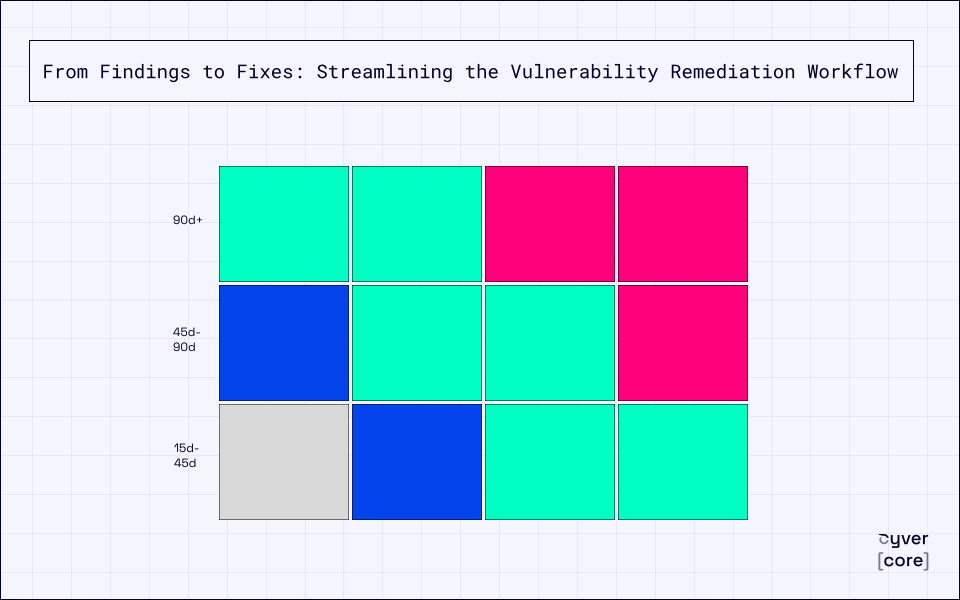
In a typical remediation workflow, a triage system is used for categorising vulnerabilities on severity, exploitability, and assets affected, and targeting the most severe ones first. But because of the manual nature of traditional vulnerability lifecycle management, doing this takes time and effort, resulting in some organisations bypassing the process altogether in favour of basic patching or reactive security measures.
Streamlining Vulnerability Remediation
In 2025, however, streamlining the vulnerability remediation workflow has become possible through automated pentest reporting and centralised vulnerability management platforms.
What do we mean by this? Well, if you’re using a platform that brings all of your findings, assessments, and scanner outputs into a single environment, you’re essentially removing the fragmentation that slows down remediation and the inconsistencies between different testers. Instead of juggling multiple spreadsheets or trying to cross-reference issues across tools, everything is automatically organised and categorised, from findings all the way through to fixes.
From Findings…
Looking at it in a bit more detail, the vulnerability remediation process involves several distinct phases. The first involves identifying security vulnerabilities, contextualising, prioritising them, and implementing the correct measures to address them. Through an automated pentest reporting platform, this can be done by:
- Centralising Imports of Findings
Vulnerabilities from different scanners can be automatically imported into a single platform, removing the need to manually consolidate results and eliminating the errors caused by scattered data sources.
- Automatic Prioritisation and Severity Scoring
Each finding is then scored and prioritised consistently, allowing security teams to focus on the most critical problems first and ensure the most high-risk vulnerability issues are addressed quickly.
- Deduplication and Contextualisation
Duplicate findings are identified and merged, while each vulnerability includes context such as affected assets, CVSS scores, and remediation guidance.
- Assigning Actionable Tickets
Findings are then converted into tasks or tickets and assigned to the appropriate team members, ensuring nothing falls through the cracks and that each issue is tracked through to resolution efficiently.
- Collaboration and Audit Trails
As well as all this, teams can comment, review, and track progress on each vulnerability, with audit management features that keep security teams aligned and accountable at all times.
… To Fixes
Once potential vulnerabilities have been identified and prioritised according to severity, the fix verification process can then be actioned. To streamline this part of the vulnerability remediation workflow, a remediation reporting platform offers several key capabilities:
- Assigning Accountability
As we mentioned above, each vulnerability can be converted into a ticket and assigned to the responsible team member, but this isn’t just about ensuring each issue is tracked. It’s about making accountability clear and enabling structured workflows, which is important considering how distributed security teams often work across multiple locations and time zones.
- Asset-Focused Remediation
A pentest reporting platform can also link vulnerabilities to the specific systems, applications, or IPs they affect, helping security teams apply fixes accurately without missing dependencies or critical assets.
- Integrated Retesting
After remediation, it’s also possible for vulnerabilities to be marked as fixed, retested, and closed, providing a clear audit trail and confirming that a security issue resolution has been effective.
- Dashboards and Notifications
It shouldn’t be underestimated how important dashboards and alerts are to the fixing process, either. Through status monitoring, notifications, vulnerability closure tracking, and collaborative communication – including secure chat and comments – all stakeholders remain synchronised, even across distributed or remote teams.
- Historical Tracking and Trend Analysis
As well as this, a record of past vulnerabilities, remediation actions, and retests is maintained, enabling security teams to identify any recurring issues and monitor improvement over time. This then helps with continuous process improvement and strategic planning, while also providing evidence for audits and compliance reporting.
Conclusion
Streamlining the vulnerability remediation workflow is an absolute must for any organisation that takes cybersecurity and operational efficiency seriously.
Pentesting is important, yes, but so too is maintaining business continuity, so you need a way to cut down the complexity and time of that process while ensuring nothing slips through the cracks. Platforms and pentest reporting tools like the ones mentioned above are the best way to do this, giving you the visibility and control needed to push your organisation forward and proactively manage security risks before they become critical.