
Every business looks to grow eventually. Whether it’s in the realm of pentesting or cybersecurity as a whole, there is so much opportunity to level up and become a provider that tackles a greater volume of client requirements.
In pentesting, however, this involves moving beyond individual engagements, with continuous validation allowing teams to provide ongoing visibility into security posture. It sounds good, and indeed, it’s necessary for organizations looking to maintain a proactive approach to security. But problems can arise when you have to operationalize it without a centralized pentesting platform that standardizes the process.
The Reason for Continuous Validation
Traditional pentesting is typically structured around individual engagements. A client defines a scope, a pentest team performs an assessment, and the evidence is collected and reported. But while this provides valuable insight into security weaknesses at a specific point in time, it only represents a snapshot of an organization’s overall security posture.
Continuous validation takes a different approach. Rather than assessing an environment once and waiting until the next scheduled engagement, this process involves regularly testing and validating security controls, giving a pentest team – and as such, the organization requesting the assessment – an idea of how risk changes over time.
This allows organizations to identify new weaknesses sooner, maintaining a more current understanding of their exposure and a way to track whether previous issues have really been resolved.
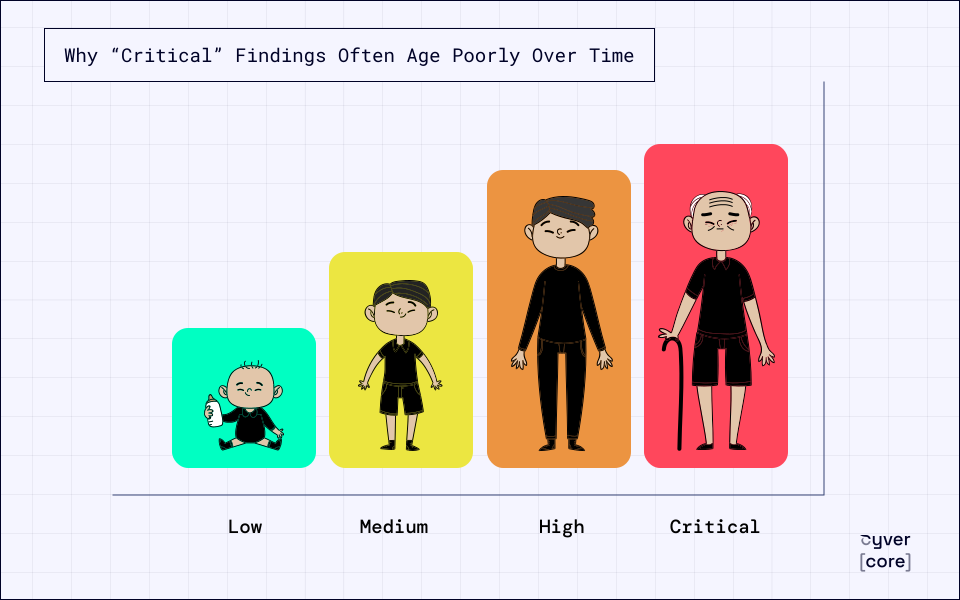
Looking at the landscape today, this is becoming more and more of a necessity. Cyber threats are evolving at a record-breaking pace, driven heavily by malicious artificial intelligence and automation, and because of this, assumptions and findings of cybersecurity become outdated far more quickly.
At one point in time, a company might have strong identity controls in place, with multi-factor authentication, regular patch cycles, and endpoint detection tools propping up a portion of their security posture.
The next day, there’s a shift in the threat landscape, with a range of possible exploitations that might not make that original posture obsolete, but certainly create new avenues for attackers to target the environment.
Organizations need to know that their posture works in the long-term, and to know this, continuous validation is needed to regularly test and verify that their defences remain effective. Delivering something like this, however, introduces a range of operational challenges for the pentest team.
The Challenges of Continuous Validation
Technical testing itself is only one part of the process, and yet there are plenty of pentest teams out there that judge their scalability by their ability to expand their technical expertise. On the contrary, while running more frequent assessments might sound like a simple extension of traditional pentesting, it’s the operational requirements that really test the limits of existing processes.
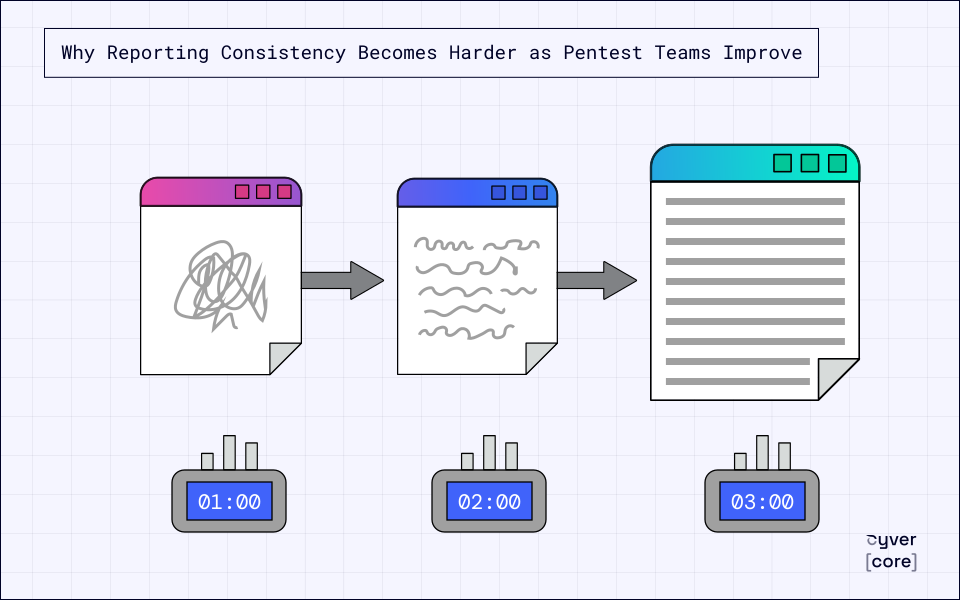
Just think, instead of managing a single engagement with a defined beginning and end, pentest teams now have to manage an ongoing stream of activity that consistently produces new evidence, new findings, and as such, new reporting requirements. With a traditional pentest, the workflow is relatively contained. The team collects evidence, analyses the results, produces a report, and moves on to the next job.
Continuous validation, however, changes this dynamic since there’s no clear point where the work is considered complete. Findings from previous assessments need to be tracked, new issues need to be compared against historical data, and teams need a reliable way to understand whether security improvements are actually reducing risk.
Remember, exposure validation without exploitability context creates noise, but that context will be far harder to piece together when the information is fragmented. Are we saying that scaling through continuous validation is impossible? No. Far from it. But before a pentest team embarks on this path, a large amount of thought needs to be put into how this would work from an operational standpoint.
Operationalization Through Structure
What’s needed is coherency and visibility. At Cyver, we focus on creating a structured environment where engagements, evidence, and findings remain connected throughout the testing process.
For example, if a pentest team identifies a compromised credential during one assessment, the associated evidence remains linked to the next one, allowing future validations to show whether that weakness has been resolved or whether attackers have found another route through the environment.
This approach essentially allows pentest teams to maintain continuity between each assessment, managing the growing volume of information that comes from repeated testing and ensuring that every finding retains its context.
It’s not necessarily about a change in process, but a change in the way a team organizes and connects the information generated throughout the engagement. Fragmentation even with single, isolated assessments can create problems, so imagine the complexities that can happen when evidence upon evidence builds up through continuous validation.
It’s a problem, and not something you can be confident with when delivering results to the client. To operate continuous validation effectively, a pentest team needs that confidence, and even more than that, it needs a framework to keep their focus on their technical expertise and away from weighty operational burdens.