
Ordinarily, when someone gets better at something, the thing they’re doing becomes easier. That’s just the natural way of the world, but as ever with cybersecurity, some of the most important subsectors have to be different.
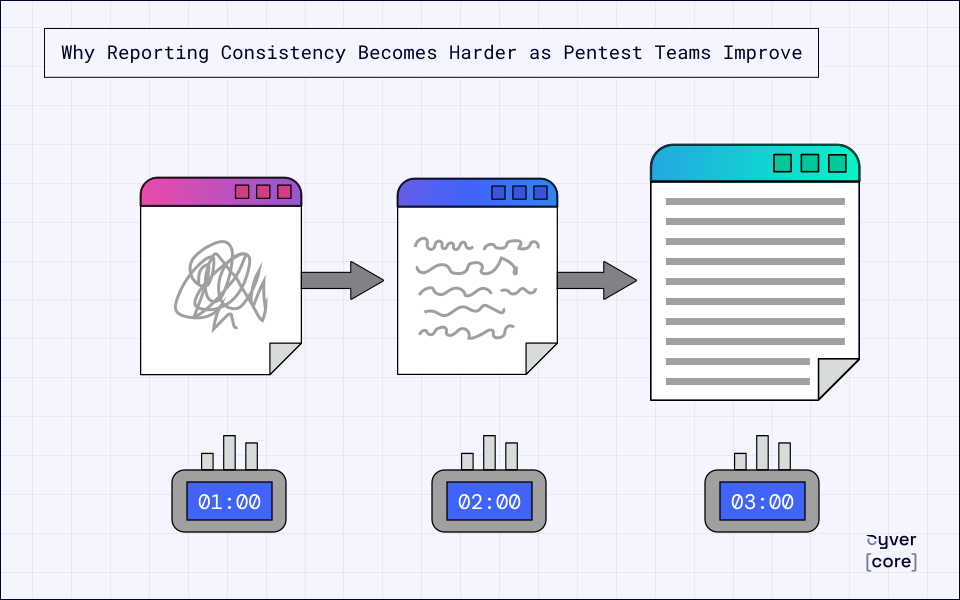
Pentesting is one of those unusual areas where the better a team gets, the harder it is to produce consistently high-quality reports. It’s nothing to do with the testing itself, or the way in which a team carries it out. It’s just a simple fact that growth in pentesting introduces more complexity. So why is this the case, and why has it made automated pentest reporting so valuable?
The Scaling Timeline of a Pentest Team
To understand this, it’s important to understand what happens when pentest teams scale. For the most part, pentest teams start out small. A handful of consultants follow the same methodology, and naturally produce reports that feel consistent because everyone is working in much the same way. As the business grows, however, the complexity of its operations increases.
Perhaps that involves more consultants joining the team, more engagements running simultaneously, or clients requesting a wider range of testing services – or perhaps it involves all three! The point is, although the processes worked perfectly in the beginning, the improvement of the team has introduced all these operational challenges that simply didn’t exist at that smaller scale.
In this way, the same flexibility that helps experienced consultants deliver great assessments can make it increasingly difficult to maintain efficient, repeatable workflows across an entire organisation.
The Knock-On Effect
That’s the underlying reason why things get more complex, but what’s the knock-on effect that we’re talking about?
Multiple Tools
Firstly, when pentest teams improve and begin handling more diverse engagements, findings have to come from multiple tools. Vulnerability scanners, web proxies, cloud security tools, custom scripts – these are all tools that produce findings in their own format, using their own terminology and severity ratings, and while that’s manageable for an individual consultant, it becomes less manageable when multiple people are working across multiple engagements.
Without a standardized way to collect and manage findings, consultants often end up copying information between these tools, reformatting evidence and even manually recreating the same vulnerabilities for every report.
Inconsistency Across Testers
It’s also worth noting that, while every team member may be assessing against the same objectives, reports can easily become inconsistent across testers. This is because each pentester has their own approach to documenting vulnerabilities, and thus, even when two consultants identify the same issue, there’s a risk that they’ll structure the finding differently and perhaps even provide different remediation guidance.
This becomes even worse as teams grow, as without a standardized reporting process, clients can receive a completely different report depending on who performed the assessment, which is bad news for brand consistency.
Review and Quality Control
Quality control is still possible, but because of the challenges mentioned above, it’s going to take a lot longer. One of the reasons pentest teams use our services is not because reporting consistency is impossible, but because the time it takes to review the quality and consistency of every report has become untenable.
Even though this is important to get right, speed still matters in cybersecurity, especially for the client. They want to know that their environment is secure and that any vulnerabilities have been identified before anything happens, and although they might not say it, they want to make sure they’ve received maximum value from their investment. The faster reports can be delivered, the better chance a pentest team has to keep clients satisfied and take on new work.
Slowed Delivery
Following on from that last point, delays in reporting affect the timeline of the project itself, not just the pentest team. Until the final report has been reviewed, approved, and delivered, clients are often left waiting before they can satisfy compliance requirements and formally close the engagement. As workloads increase, then, reporting can quickly become the bottleneck.
Even when the testing itself is completed on schedule, the hours spent finalising findings and making revisions can delay delivery by days. For growing pentest teams, then, reducing that reporting overhead and cutting delivery times is just as important as improving the efficiency of the assessment itself, and that’s why they’re looking for an all-encompassing solution that streamlines the entire reporting lifecycle without compromising quality or consistency.
The Solution
Here at Cyver, our automated pentest reporting platform allows teams to centralize their findings and ensure their reporting is as consistent as possible. Whether that’s by giving them the ability to import findings from security tools, consolidate results into structured vulnerabilities, or use dynamic tokens to automate repetitive data, this is a reporting solution that ensures standards can remain as high as possible. That way, when a pentest team improves and develops, they’re not made to suffer for it!