

The point of pentesting is to identify how an attacker could compromise an environment, but knowing something is exposed isn’t exactly the most helpful insight for a client looking to improve their security posture.
On the contrary, it can create a lot of noise around risk prioritization – useful information, but not exactly actionable without necessary context.
The Role of Exposure Validation
Whether it’s an open port or a misconfigured service, exposure validation exists to confirm that a potential attack surface is accessible. In other words, a security team doesn’t have to rely on assumptions or automated detections alone, but can instead see where the exposed asset is and confirm that it’s real.
This is an important first step because organizations can’t effectively reduce risk without first understanding where the risk is located.
By validating exposed systems and services, pentest teams work to eliminate false assumptions, with the best findings feeding into a clear, automated pentest report with an accurate picture of the attack surface.
But that only tells part of the story. Or, rather, it only answers one of the two important questions: What can an attacker actually see or reach?
The Role of Exploitability Context
The other question is: What can an attacker actually do with this vulnerability?
It’s important to note that exposure and exploitability aren’t the same thing. While exposure tells you that something is there, exploitability tells you whether it can realistically be targeted, and what level of risk it actually presents.
Without that context, every exposed asset begins to look equally important, and that makes it much harder for clients to prioritize their remediation efforts effectively.
Let’s say a pentest team has identified an outdated web application that’s publicly accessible and running a version known to contain a vulnerability. From an exposure perspective, this is a valid finding because the application is visible and the vulnerable software is present.
However, further testing reveals that exploiting that vulnerability requires administrator credentials that can’t be obtained – as well as a range of security controls that work to restrict access. While the exposure exists, then, the exploitability is far lower than the initial finding suggests, meaning it’s a lower priority on the client’s list of remediation tasks.
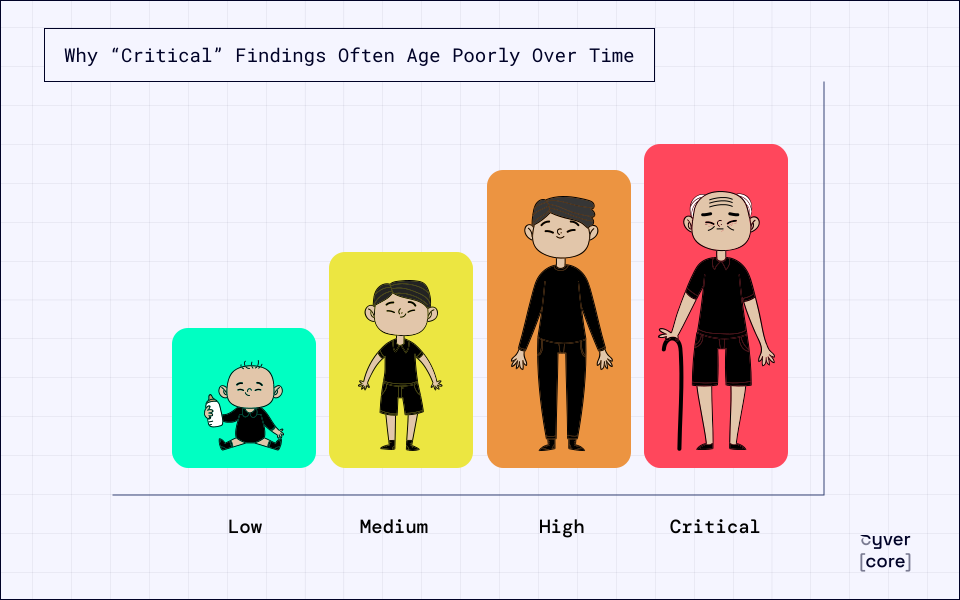
Conversely, a vulnerability that appears relatively minor on its own could potentially become exploitable when combined with other weaknesses.
A low-privilege user account, for example, might not seem particularly concerning when it’s viewed in isolation, but when it’s chained with a privilege escalation vulnerability – such as a misconfigured access control or an unpatched local vulnerability – an attacker could gain administrative access.
Suddenly, two individually manageable issues become a realistic attack path, and this is only understood because the exposure has been given context. Without that context, the risk would remain unclear, and that’s a dangerous thing as far as the client is concerned.
Drowning Out Noise
It’s important, in any case, to cut out noise from security findings, because not every exposure represents the same level of risk.
When every potential weakness is presented without exploitability context, clients are left with a long list of issues but little understanding of where their attention should actually be focused, and so it’s easy for genuinely critical risks to become buried.
What happens then is misprioritization: a client might start by focusing their remediation efforts on a lower-risk finding, allowing a more significant vulnerability to fester and potentially become a gateway for attackers if they don’t get to it in time.
Indeed, they might even be wasting their resources, since the ‘exposure’ that they’re focusing on might not be genuine enough to be remediated in the first place – as in the scenario mentioned above.
In other words, pentesting as a service is not just about identifying more exposure, it’s about understanding which exposures actually matter and providing the exploitability context that clarifies that.
Providing Useful Context
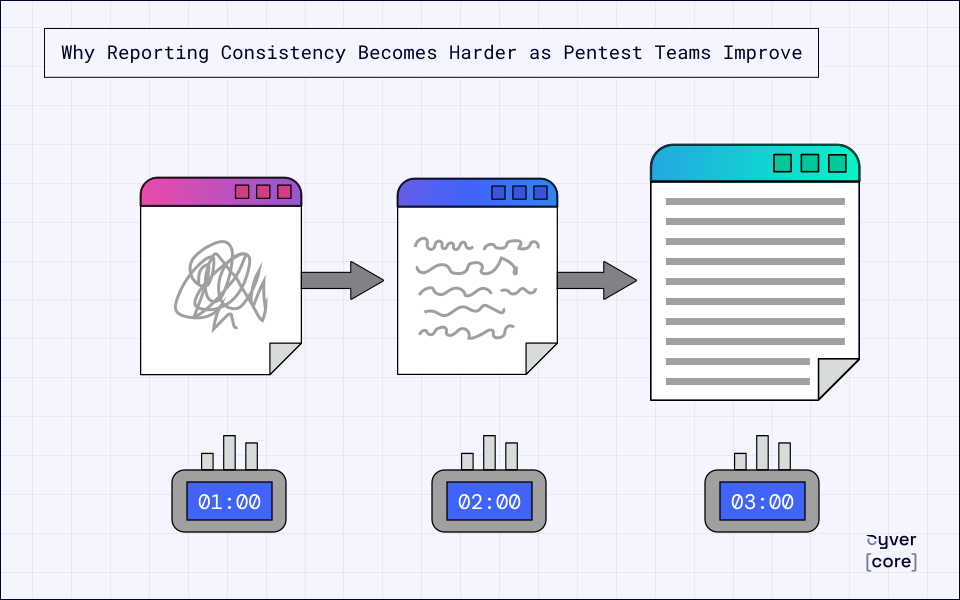
As for how the context is provided, this is another factor that matters. Having exploitability information available is one thing, but presenting it in a way that clearly explains risk is what allows clients to make those informed decisions.
This is where organization becomes so important. Without a clear structure, exploitability context can quickly become just another piece of information for clients to interpret, rather than a tool that helps them prioritize effectively.
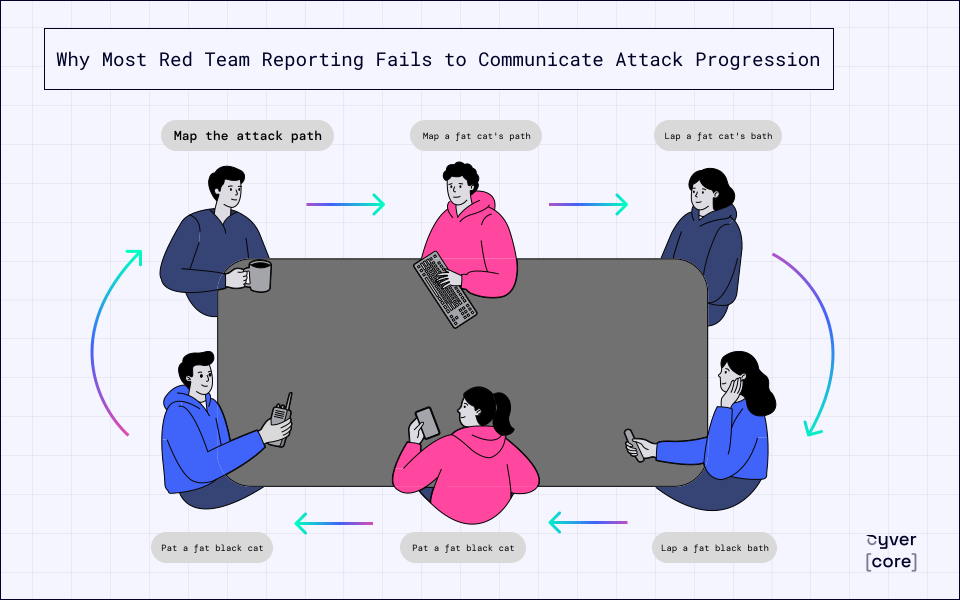
The relationship between exposures, attack techniques, and potential outcomes all needs to be clear, showing both the weaknesses that exist and how an attacker could realistically use them.
This is why so many pentest teams are using more structured solutions to really nail this process: if the information is fragmented on their side, there’s every chance the intelligence will be fragmented when it’s handed over to the client – which will make the point of the exercise pretty much obsolete.
With a clear framework and centralized platform, it not only becomes possible to present exploitability context, but ensure that every part of that context is genuinely understandable and actionable.