
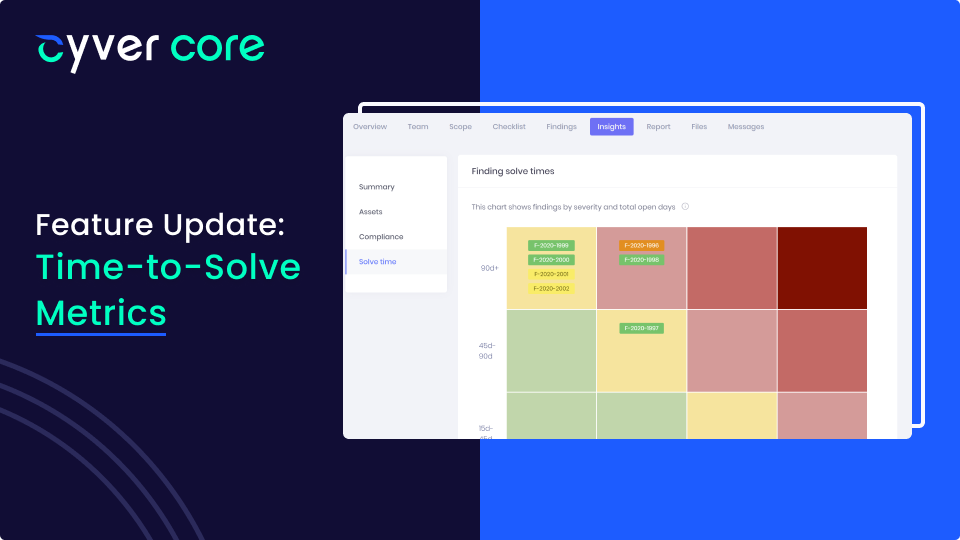
Cyver Core Feature Update: Time-to-Solve Metrics

by | Apr 13, 2021 | New Features

Time-to-Solve Metrics are the newest addition to Cyver Core’s suite of “Insights” features in the client portal. These metrics deliver insights into cybersecurity, risk areas, and compliance, which you can offer as a service for your clients.  

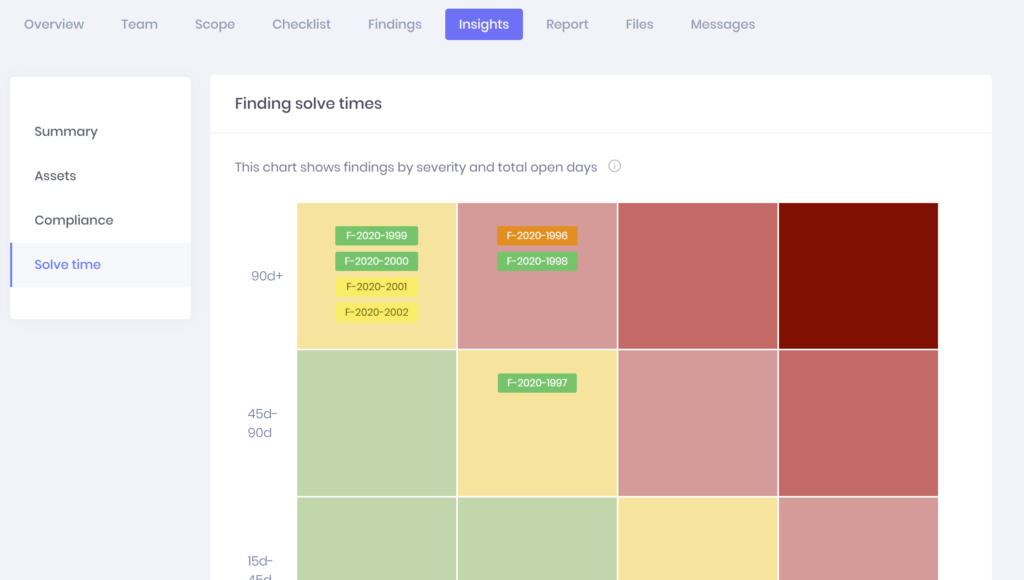
Time-to-Solve metrics help clients track open vulnerabilities based on total risk. To achieve this, we plot vulnerability metrics based on the CVE scores and risk evaluation uploaded by Pentesters. The Time-to-Solve chart uses industry benchmarks for ideal Time-to-Solve based on deadlines achieved by top performers in cybersecurity. Once you upload findings to a pentest, Clients can track those vulnerability findings based on:  

  • A) Listed severity  
  • B) How long the vulnerability has been open  
  • C) How much risk that open vulnerability presents.  
How it Works  

Cyver Core uses four severity ratings to offer recommended solve times:  

  • Low – Findings should be solved within 90 days  
  • Medium – Findings should be solved within 45 days  
  • High – Findings should be solved within 15 days  
  • Critical – Findings should be solved within 7 days 

These metrics map to the chart, so clients can see, at-a-glance, when risks associated with lack of remediation become worse. In addition, client teams receive notifications when a finding moves from one category to the next. This makes it easy to keep track of vulnerabilities and creates built-in-reminders to remediate.  

Time-to-Solve Metrics are available with Pentest Engage or higher pentests. All metrics are per-pentest, and can be viewed under the pentest via “Insights” 

Feature Highlight: Smarter Planning with the New Calendar Component

Feature Highlight: Smarter Planning with the New Calendar Component

Plan smarter. Move faster. Stay in control.We’re introducing a brand-new Calendar component designed to make planning, scheduling, and task management more intuitive than ever, fully integrated into your workflow. Whether you're managing pentests or coordinating...

How Inconsistent Risk Scoring Breaks Security Metrics Over Time

How Inconsistent Risk Scoring Breaks Security Metrics Over Time

CVSS scores are perhaps the most important part of a pentest report, giving teams a standardised way to understand the severity of vulnerabilities they uncover and prioritise remediation efforts.  But they need to be consistent. With so much change in applications,...

Why Two Pentests of the Same App Rarely Produce the Same Results

Why Two Pentests of the Same App Rarely Produce the Same Results

In 2026, more and more companies are pentesting their applications. This is a good thing, of course – it demonstrates increased awareness amongst brands of the cybersecurity risks they face, and just how much of a threat they can be for their data and systems. But...

The Ceiling of Automated Pentesting (And Where It Still Wins)

The Ceiling of Automated Pentesting (And Where It Still Wins)

Automation in the world of cybersecurity has become a core part of many modern strategies. From continuous vulnerability scanning to real-time network monitoring, automation has enabled organisations to identify and respond to threats at scale, but nowhere is this...